The R.E.S.E.T Studio™Method
The RESET Studio™ is a clinically informed, research-grounded restorative wellness model designed specifically for healthcare professionals. Its methodology integrates Dr. Shahidrah Cowgill’s research on moral resilience with nervous-system regulation, creative processing, reflective practice, relational connection, and self-stewardship.
RESET was developed around a simple principle: healthcare professionals should not have to reach burnout, moral injury, or crisis before recovery becomes a priority.
The Research Foundation
The R.E.S.E.T Studio™ grew from nearly a decade of clinical work with high-demand helping professionals and Dr. Shahidrah Cowgill’s doctoral research examining moral resilience among healthcare workers during the COVID-19 pandemic.
Her research explored what happened when healthcare professionals were required to sustain prolonged responsibility, sacrifice, uncertainty, ethical strain, and repeated exposure without sufficient opportunity for recovery. The findings reflected profound exhaustion, fractured trust, professional-identity disruption, emotional disengagement, and strain across important moral-resilience capacities including personal and relational integrity, self-regulation, self-stewardship, buoyancy, and moral efficacy.
The R.E.S.E.T Studio™ translates those findings, integrates evidence based practices, and clinical experience into a preventive restorative-wellness model.
Rather than waiting for burnout or crisis to become the signal that something needs to change, R.E.S.E.T Studio™ creates intentional quarterly opportunities for healthcare professionals to regulate, reflect, reconnect, evaluate their current capacity, and make meaningful adjustments consistently.
The goal is not to help healthcare professionals tolerate increasingly unsustainable conditions.
The goal is to help them recognize strain earlier, protect what matters, recover more intentionally, and retain greater agency over how they live and work.
MINDFULNESS
Positive psychology, mindfulness, and CBT were most effective for improving resilience and reducing stress, with sustained effects observed for positive psychology and mindfulness.
Janitra, F. E., Chen, R., Sung, C. M., Wang, C. H., Wibawa, Y. A., Banda, K. J., Chiang, K. J., & Chou, K. R. (2025). Comparative effectiveness of resilience-related interventions on resilience and stress for healthcare professionals: A network meta-analysis of randomized controlled trials. International journal of nursing studies, 170, 105151. https://doi.org/10.1016/j.ijnurstu.2025.105151
MORAL RESILIENCE
A 2024 study of nurses found that higher moral resilience was associated with lower quiet quitting, burnout, and turnover intention. Specifically, moral efficacy, personal integrity, relational integrity, and response to moral adversity were each related to different aspects of disengagement and burnout.
Galanis, P., Moisoglou, I., Katsiroumpa, A., Vraka, I., Siskou, O., Konstantakopoulou, O., & Kaitelidou, D. (2024). Moral Resilience Reduces Levels of Quiet Quitting, Job Burnout, and Turnover Intention among Nurses: Evidence in the Post COVID-19 Era. Nursing reports (Pavia, Italy), 14(1), 254–266. https://doi.org/10.3390/nursrep14010020
Rushton, C. H., Swoboda, S. M., Reller, N., Skarupski, K. A., Prizzi, M., Young, P. D., & Hanson, G. C. (2021). Mindful Ethical Practice and Resilience Academy: Equipping Nurses to Address Ethical Challenges. American journal of critical care : an official publication, American Association of Critical-Care Nurses, 30(1), e1–e11.
Qualitative Exploration of the Lived Experiences of Healthcare Workers During the COVID-19 Pandemic Delta Surge by Cowgill, Shahidrah Roberts, National University, 2025, 178 pages; 32400121
CREATIVE EXPRESSION
A randomized trial of 146 healthcare professionals found 12 weeks of creative arts therapy improved anxiety, depression, PTSD symptoms, burnout, and turnover intention.
Moss, M., Edelblute, A., Sinn, H., Torres, K., Forster, J., Adams, T., Morgan, C., Henry, M., & Reed, K. (2022). The Effect of Creative Arts Therapy on Psychological Distress in Health Care Professionals. The American journal of medicine, 135(10), 1255–1262.e5.
A randomized study of nonpatient-facing healthcare workers found improvements in anxiety, depression, emotional exhaustion, depersonalization, and turnover intention, with some benefits lasting 12 months.
Avallone Mantelli, R., Forster, J., Reed, K., Edelblute, A., Henry, M., Sinn, H., & Moss, M. (2025). Creative Arts Therapy Reduces Psychological Distress in Nonpatient-Facing Healthcare Workers. The American journal of medicine, 138(4), 660–668.e5.
A 2025 multicenter RCT with 129 healthcare professionals across NHS hospitals found six weekly group art-therapy sessions significantly reduced emotional exhaustion, depersonalization, perceived stress, anxiety, and depression, with gains sustained at 3 months.
Tjasink, M., Carr, C. E., Bassett, P., Soosaipillai, G., Ougrin, D., & Priebe, S. (2025). Art therapy to reduce burnout and mental distress in healthcare professionals in acute hospitals: a randomised controlled trial. BMJ public health, 3(2), e002251. https://doi.org/10.1136/bmjph-2024-002251
WORKPLACE WELL-BEING
A 2023 systematic review of 33 healthcare-worker intervention studies found improvements in wellbeing, engagement, quality of life, resilience, burnout, stress, anxiety, and depression across many interventions.
Cohen, C., Pignata, S., Bezak, E., Tie, M., & Childs, J. (2023). Workplace interventions to improve well-being and reduce burnout for nurses, physicians and allied healthcare professionals: a systematic review. BMJ open, 13(6), e071203. https://doi.org/10.1136/bmjopen-2022-071203
Consistency is Key
Research with practicing healthcare professionals suggests that structured, recurring interventions involving mindfulness, creative expression, reflection, resilience-building, and ethical/moral resilience can improve stress, emotional exhaustion, engagement, resilience, and psychological wellbeing. The benefits of planned monthly and quarterly wellness interventions exceed one retreat or workshop.
WHAT IS THE R.E.S.E.T STUDIO METHOD™
-
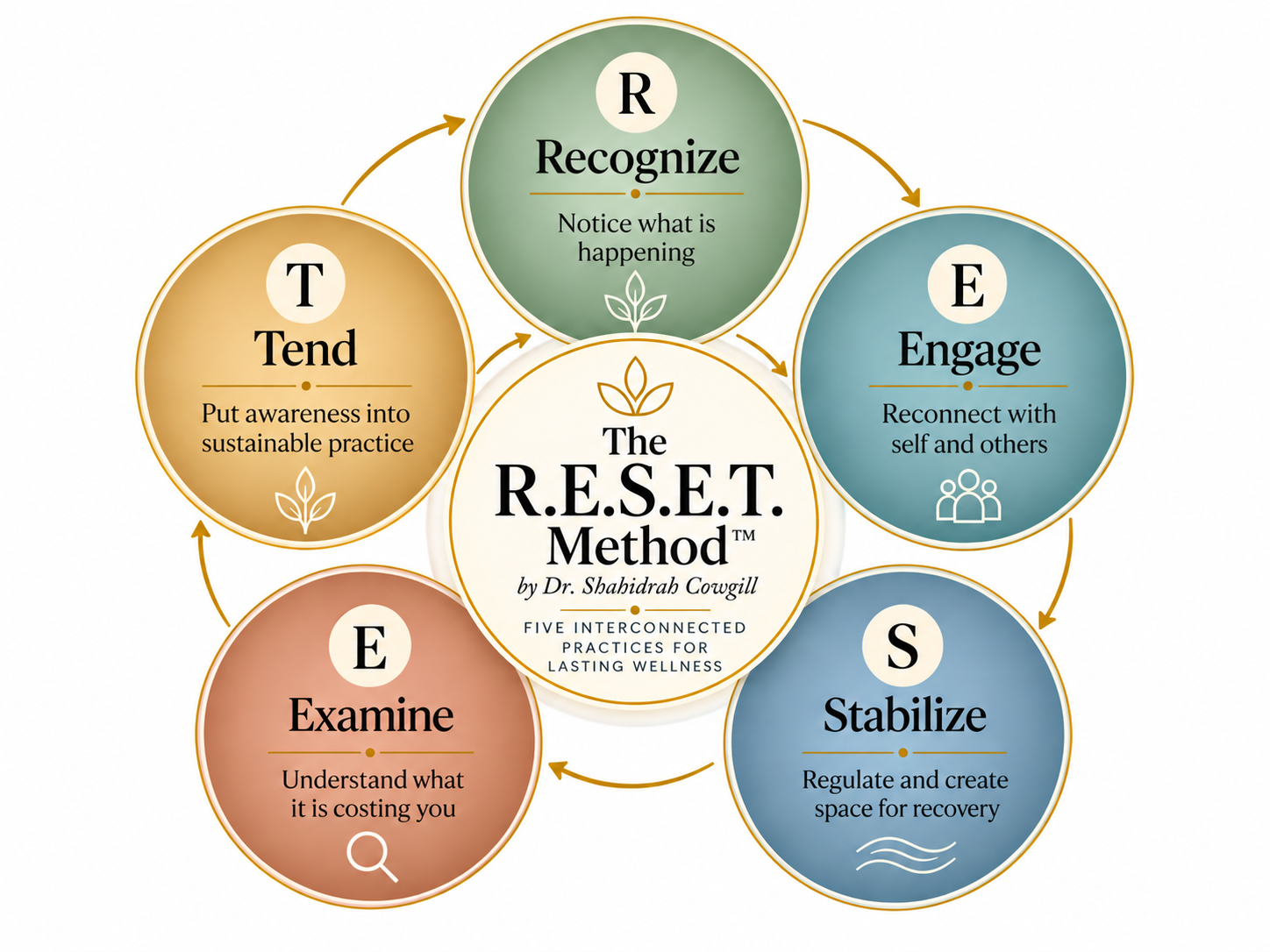
Recognize is interweaved throughout the RESET Studio Method™ and focuses on increasing awareness. Many professionals spend extended periods operating in survival mode without fully recognizing the impact chronic stress, overload, and emotional exhaustion are having on their mind, body, relationships, and overall functioning.
This phase creates intentional space to slow down, quiet external noise, reduce distractions, and step outside of constant performance demands long enough to notice what is happening in the body, emotions, life, work and relationships. Awareness is essential because stress patterns are not always obvious. Some are visible, while others become normalized over time and operate beneath conscious awareness.
The goal of this phase is not judgment—it is observation.
Awareness becomes the foundation for meaningful restoration and sustainable change.
-
Engage focuses on reconnecting with the body, the senses, the present moment, and safe connection with others. Chronic stress often disconnects people from themselves and narrows attention toward constant functioning, productivity, and survival. This phase helps gently interrupt that pattern.
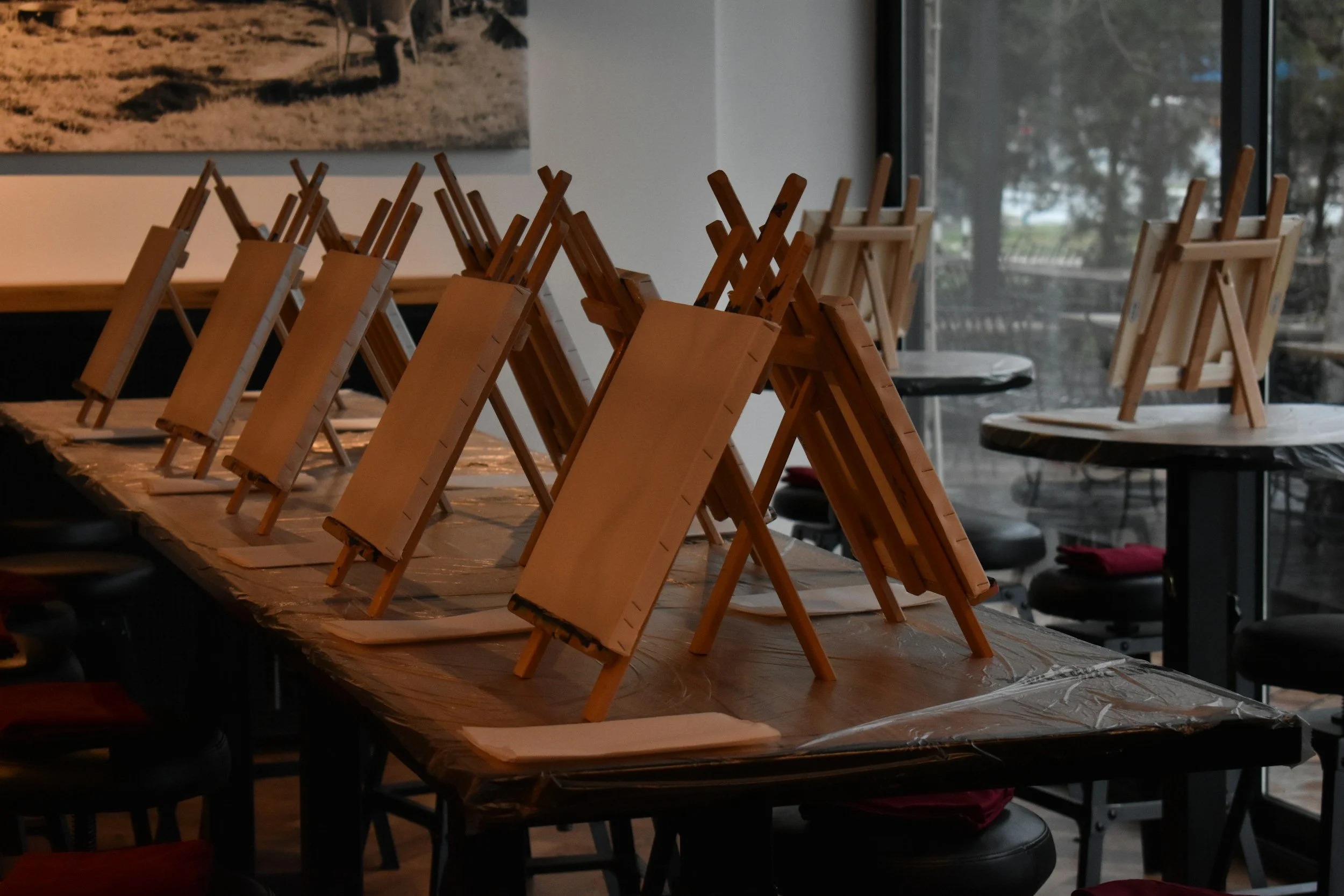
Creating art is a hands-on activity that naturally grounds attention and invites individuals to internally engage with themselves without pressure or performance. The use of music, sound, sensory experiences, movement, and creative expression helps support regulation through the nervous system and creates opportunities for emotional processing that do not rely solely on words.
Engage is intentionally designed to feel low-pressure, calming, and restorative.
In addition to internal engagement, this phase also incorporates gentle relational engagement through brief, optional moments of connection with colleagues or group members. Short reflections, shared takeaways, and witnessing others in a supportive environment can help reduce isolation and remind participants they are not alone in what they are carrying.
-
Helpers spend so much time adapting to pressure that their nervous systems begin operating in persistent states of activation, emotional fatigue, hypervigilance, or depletion without realizing how dysregulated they have become.
Stabilization is about helping the body regulate coming down from sustained activation and create enough internal capacity to think and feel clearly. Shared tools help reduce the intensity of recent stressors, ongoing emotional accumulation, and internal overwhelm while creating greater mental and emotional space for clarity, regulation, reflection, and recovery. As acute stress begins settling, many individuals notice improved emotional capacity, decreased internal pressure, and a greater ability to remain present and engaged.
-
creates structured space for participants to look more closely at what they have been carrying and what may be contributing to chronic overload, depletion, disconnection, or emotional exhaustion.
This phase moves beyond simply noticing stress and asks participants to consider the meaning behind it. They are invited to examine experiences, beliefs, routines, relationships, expectations, and patterns that may no longer support their wellbeing, values, or current capacity.
The goal is to identify:
what is draining energy
what has become unsustainable
where boundaries may need attention
what feels out of alignment personally, professionally, or relationally
where time, energy, and care need to be redirected
Examine is not about self-criticism. It is about gaining enough clarity to understand what needs attention before meaningful change can happen.
-
Tend focuses on the ongoing practice of sustaining resilience through intentional self-stewardship, self-regulation, through aligned daily practices to support bouyancy.
Participants identify the rhythms, boundaries, behaviors, and restorative experiences necessary to protect their energy, maintain emotional capacity, and remain connected to purpose, clarity, and sustainable functioning over time.
Start Here
-
![]()
Let's Chat
Book a Discovery Call For Your Team
-
![]()
Experience
An Open Studio
-
![]()
Download
Our Procurement Ready Kit for Organizations